
Ashwagandha Benefits for Women: Calm, Energy and Hormonal Balance
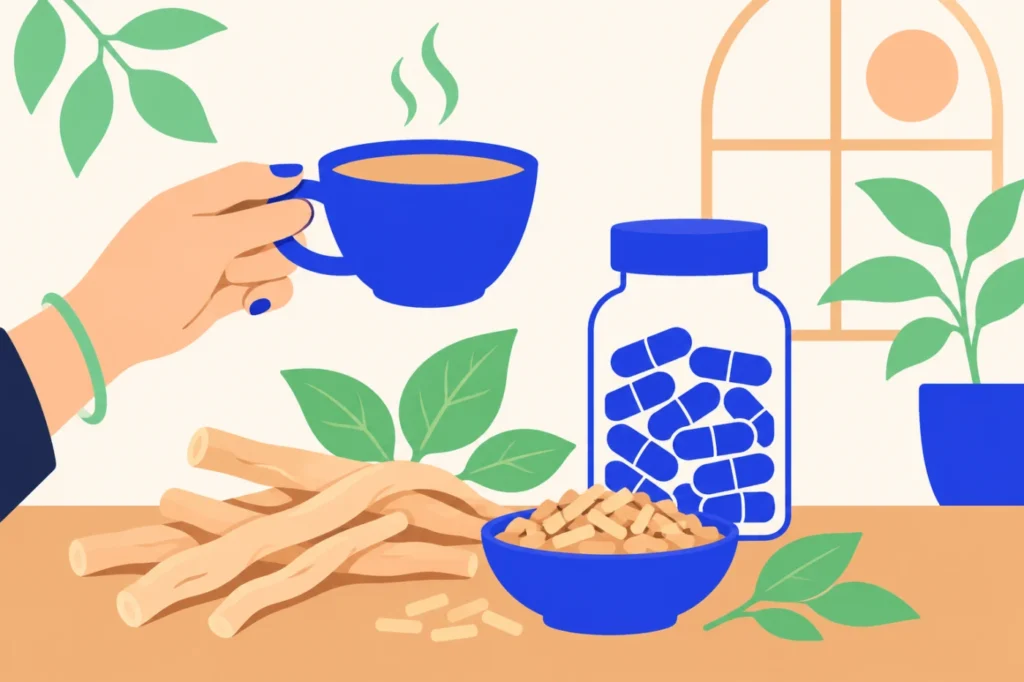
Ashwagandha benefits for women are a favourite topic in wellness circles, and the interest keeps growing. This humble root from India has been used for thousands of years to help people cope with strain. Today, women reach for it when work, family and hormones all demand attention at once.
What makes it special? Ashwagandha is an adaptogen, which means it helps the body adjust to stress instead of simply masking it. In this article, you will learn how ashwagandha works, what women report, how to choose a quality extract and how to avoid common mistakes.
What are ashwagandha benefits for women based on?
Ashwagandha (Withania somnifera) is a small shrub, and its root is the part used in supplements. The root contains withanolides, alkaloids and flavonoids. The withanolides are considered the characteristic active compounds, which is why serious products state their content on the label.
The NCCIH summarises what researchers know about ashwagandha, including its traditional use for stress and its safety considerations. Several clinical studies suggest that standardised extracts may support a feeling of calm and help people cope with everyday stress. As always, individual results vary.
Ashwagandha benefits for women under stress
Stress is the number one reason women try ashwagandha. Many describe a quieter inner volume: the same busy day, but with less tension in the chest and shoulders. In addition, users often mention that they react less sharply to small irritations.
This effect builds slowly. Most women notice a shift after two to four weeks, and the full picture appears after about two months. Because ashwagandha works on the body’s overall adaptation, it fits people who feel “tired but wired”.
Calmer evenings and better sleep
When the stress response eases, falling asleep tends to get easier. Some women take ashwagandha in the evening for exactly this reason. Others prefer the morning, so that the calm carries through the day. Either way, consistency matters more than timing.
Energy, mood and hormonal balance
Ashwagandha is not a stimulant, yet many women report steadier energy. Because it supports the way the body manages stress, there is less of the up-and-down pattern that comes from running on adrenaline and coffee.
Hormonal life stages, such as perimenopause, often bring tension, poor sleep and mood swings together. Therefore, women in their forties and fifties are among the most enthusiastic users. The NHS describes the common symptoms, and many of them respond to the same pillars: sleep, movement, food and stress management. Ashwagandha can be one supportive piece of that puzzle.
How to choose among ashwagandha benefits for women products
Quality varies enormously across the market. Keep this checklist handy:
- A standardised root extract. Look for a stated withanolide content, such as 35 mg per capsule.
- Root rather than leaf. Most traditional use and research concerns the root.
- A realistic dose. One concentrated capsule beats six capsules of weak powder.
- Quality testing. Independent testing for heavy metals and microbes is a strong sign.
- Vegan-friendly and clean. Fewer fillers mean fewer surprises.
Ashwagandha benefits for women at different life stages
Women use ashwagandha for different reasons over the years. In their twenties and thirties, the main motivation is usually stress from work, study and new responsibilities. These women often want calm without drowsiness, so they take a capsule in the morning and notice a steadier day.
In their forties, hormonal changes begin to enter the picture. Sleep gets lighter, the mood less predictable and energy less stable. Here, ashwagandha is often chosen as a gentle partner to a healthier evening routine. After fifty, many women value its role in everyday resilience, together with movement, protein and good sleep habits.
Our choice: NEURINU Super Ashwagandha
NEURINU Super Ashwagandha contains a root extract standardised to 35 mg of withanolides in each capsule. You take one capsule a day with plenty of fluids, and a bottle lasts 50 days. The product is vegan-friendly, and the extract is of pharmaceutical grade. See the product page for the full details.
If you want a broader formula for tense days, you can pair it with NEURINU Calmgen, which combines calming herbs, amino acids and minerals. Our guide to supplements for stress relief explains how to combine them sensibly.
Resilience is not about never feeling pressure. It is about recovering faster once the pressure passes.
What a typical ashwagandha routine looks like
Knowing the timeline keeps you motivated. During the first week, most women notice little, and that is normal. Between weeks two and four, evenings often feel softer and the reaction to small irritations calmer. By weeks six to eight, many report that busy days feel more manageable and that they recover faster after a demanding stretch.
Write down three things each Sunday: how you slept, how your mood felt and how your energy behaved. After a month, compare the notes. The trend is usually more convincing than any single day.
How to take ashwagandha for the best effect
Follow this simple routine:
- Take one capsule daily with a meal and plenty of water.
- Use it regularly for at least four weeks before judging.
- Pair it with seven to eight hours of sleep and daily movement.
- Keep a short mood and sleep diary to see the trend.
- Pause occasionally if you plan to use it for many months, and listen to your body.
Common mistakes with ashwagandha benefits for women
Expecting instant calm. Ashwagandha is not a sedative. It builds gradually, so give it time.
Choosing the cheapest powder. Weak products can leave you disappointed. A standardised extract makes the experience more reliable.
Ignoring the basics. Even the best adaptogen cannot offset five hours of sleep a night. Treat it as a booster of good habits.
Who should be careful?
Ashwagandha is not suitable during pregnancy or breastfeeding. People with thyroid conditions, and those who take sedatives, thyroid or immunosuppressant medicines, should speak to a doctor before using it. If you notice an upset stomach, take the capsule with food. In addition, stop using it and ask a professional if you notice unusual symptoms, because individual reactions can differ from person to person.
Quick answers about ashwagandha benefits for women
How long does ashwagandha take to work? Most women feel a shift after two to four weeks, with the fullest effect at around eight weeks.
Can I take it every day? Yes, daily use is the normal pattern. Follow the dose on the label.
Does it help with sleep? Many women find that a calmer stress response makes sleep easier, although ashwagandha is not a sleeping pill. For a dedicated evening routine, our article on calming supplements offers more ideas.
Find your calmer rhythm
Ashwagandha benefits for women are best experienced with a good extract, patience and supportive habits. Start with one capsule a day, keep notes and watch how your evenings and your energy change over the next two months. You may be pleasantly surprised at how steady a busy life can feel.
Explore more calming options in our shop.
Keep reading

Supplements for Stress Relief: What Really Helps You Feel Calmer
Supplements for stress relief work best as part of a routine. Learn which ingredients matter, how adaptogens and minerals fit in, and how to choose.
10 November 2026 · 6 min read
Magnesium for Sleep and Anxiety: How It Helps You Unwind
Magnesium for sleep and anxiety supports calm nerves and restful nights. See which forms absorb best, how much to take, when to take it and who should be careful.
10 November 2026 · 7 min read